
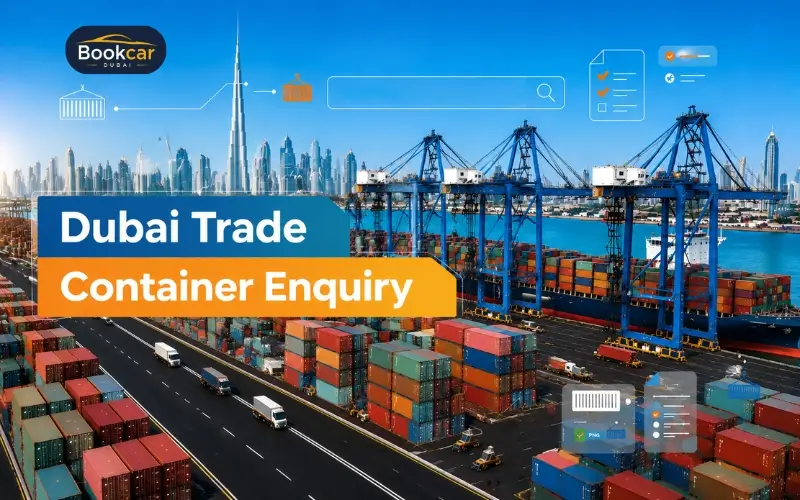

The smooth flow of goods through shipping routes, distribution centers, and warehouses is essential to global trade. At every stage of the product’s journey, businesses involved in importing or exporting need accurate information about shipments. Companies can plan their operations better and avoid delays by knowing where the cargo is.
Online platforms that support container inquiry allow users to track their shipments using a reliable system. Businesses can now view real-time cargo updates instead of waiting on manual reports. It improves logistics, helps make faster decisions and allows for better planning.
The increasing activity in the UAE has increased the importance of visibility for shipments. Modern tracking tools allow companies to monitor cargo movement, improve coordination and maintain better control of their supply chains.
What is Container Enquiry ?
Container enquiry systems are online solutions that track cargo throughout the entire shipping process. It gives information on shipment milestones, transport progress, terminal activity, and delivery schedules.
Transparency is the main goal of these systems. Businesses must know the location of their cargo, when they are expected to arrive and if there have been any delays during transport. Accurate shipment information allows businesses to plan ahead and reduces uncertainty.
The majority of tracking platforms are linked to databases for carriers, port systems and logistics networks. The information is automatically updated whenever a shipment enters a new phase of the transportation process. The information is updated automatically so that all stakeholders have access to the latest shipment details.
Many companies rely on container tracking platforms for improved operational efficiency and better control of cargo movements.
Why Visibility of Shipments Matters
Modern logistics relies heavily on the visibility of shipments. Businesses may have difficulty with inventory planning and scheduling, as well as customer communication, if they lack accurate tracking information.
Companies can better coordinate their receiving operations when they know the exact location where their shipments are. Transport providers can schedule pickups and warehouse teams can prepare to receive incoming cargo. Customers can also receive more accurate estimates of delivery.
Real-time visibility can also help reduce costs. Delays can lead to storage fees, disruptions in transportation, and shortages of inventory. Businesses can respond to issues before they become bigger problems by having early access to shipment data.
tracking shipping containers has revolutionized logistics by allowing faster shipment updates, and relieving the need for manual reporting.
Online Tracking Systems: How They Work
Modern tracking platforms gather shipment data from multiple sources during the entire transportation process. These systems track cargo movement from the booking confirmation to final delivery. As a shipment moves through the terminals, vessels and transport networks, it generates operational events. These events are automatically recorded and made accessible through online tracking portals.
You can search for information about shipments using the following:
- Container Numbers
- Booking References
- Shipping documents
- Cargo references
The system will retrieve the details of the shipment and display the current status after you enter the relevant information.
cargo status is a tool that businesses use to maintain efficient supply chains and coordinate logistics.
Understanding container numbers and tracking references
Each shipping container is assigned a unique number which allows it to track its progress. This number is a digital identity that helps logistics providers track movement in multiple locations.
Container identifiers are used by tracking systems to link shipment events with specific units of cargo. The tracking record is updated when a container enters or leaves a terminal, boards a vessel, reaches a port of destination, or goes to inland transport.
Container Number Tracking is a process that allows users to quickly locate shipment information by entering the container identifier in a tracking platform.
It is crucial to provide accurate reference information, as tracking results are dependent on the correct shipment data. A small mistake in the reference number may prevent shipment updates.
Tracking a shipment in different ways
Depending on the information available, businesses can use different references to find out about shipments.
- Container Number
- Booking Number
- Bill of Lading Number
- Carrier Reference
- Refer to the Logistics Section
The different tracking methods allow users to obtain information about shipments even if one reference is not available.
Many organizations use container shipping tracking solutions which support multiple search options to improve accessibility and convenience.
Container tracking through ports and terminals
The port is a key location in the shipping process. Cargo spends a lot of time at terminals for loading, unloading and customs processing. The tracking systems allow users to see the terminal activity by recording milestones. Users can see information about arrivals, departures and cargo handling activities.
A port container track allows businesses to understand what’s happening in marine terminals, and plan transportation before cargo is available for pickup.
This level of transparency supports better planning and reduces delays in terminal operations.
Tracking of Vessels and Sea Cargo
The majority of international shipments are transported by cargo ships that transport containers from one port to another. Businesses can estimate arrival times by tracking vessel movements.
A vessel track allows users to monitor the location of ships, their progress on routes, and their expected arrival times. This information gives valuable insight into the timeline of transportation.
Sea freight tracking is also used by many organizations to track maritime shipments during the transit phase. These systems enable users to monitor route changes and identify delays.
The accurate vessel information helps to improve planning and operational efficiency across the supply chain.
Import shipment monitoring
Import operations are complex and require coordination among transportation providers, customs officials, warehouses, receiving teams, and other parties. Delays can affect inventory availability and business performance at any stage.
Businesses can track incoming shipments using container tracking before they reach their destination. Logistics teams can prepare customs documents, schedule transportation and plan warehouse resources ahead of time. Import tracking helps improve planning and reduces uncertainty about shipment arrival dates.
Many companies that keep track of the entire import process can better manage their inventory and avoid disruptions in operations.
Export Shipment Monitor
Exporters need to know where their cargo is even after it leaves the port of origin. Monitoring shipment progress can help businesses to maintain customer confidence as well as verify delivery promises.
Exporters can track shipment progress using export tracking from the moment they leave until their final arrival. This information improves customer communication, and helps with overall shipment management.
Export visibility enables organizations to confirm cargo movement, monitor transit progress and address any potential issues before they impact delivery schedules.
The accuracy of tracking information improves the relationship with customers, and increases transparency in the supply chain.
Container status updates explained
The tracking systems help companies understand the progress of their cargo by providing them with important milestones.
Container Arrival status
The container status confirms cargo has arrived at a port, terminal or destination facility. This update is often used to trigger preparations for transportation and customs clearance.
Container Departure status
The container status indicates cargo has left the port or terminal, and is now moving to the next stage.
Container Release status
The container status indicates whether the cargo has finished all required processing and is ready for pickup or transportation.
Container Status
The container status confirms cargo has arrived at its final destination.
These updates offer valuable insight into operational efficiency and can help businesses better coordinate their resources.
Read Also: BurJuman Metro Station
Tracking information available online
| Tracking information | Purpose |
| Container Number | Shipment Identification |
| Vessel Name | Monitor Ship Movement |
| Port Information | View Terminal Activities |
| ETA | Arrival planning and estimation |
| Delivery Updates | Confirm the final status of your shipment |
| Booking Details | Verify the shipment records |
| Transit Events | Track the movement of your vehicle |
Tracking improves supply chain efficiency
Information accuracy and the ability to make timely decisions are essential for modern supply chains. Tracking systems give visibility to multiple stakeholders, allowing them to coordinate their activities.
Better visibility of shipments can help businesses improve their inventory planning, reduce delays and optimize transport schedules. Access to accurate tracking information improves communication among logistics providers, operational teams, and customers.
Container Movement Tracking allows organizations to monitor shipment progress with greater accuracy and efficiency.
Real-time updates allow companies to react quickly to changing conditions and maintain smoother logistic operations.
Challenges Businesses Face During Shipment Tracking
Logistics providers face challenges in monitoring cargo movement despite technological advances. Tracking accuracy can be affected by delayed updates, incomplete shipment information, terminal congestion and documentation problems.
Customs procedures may cause unexpected delays, as can weather conditions. Businesses that regularly monitor shipment information are better prepared to handle these situations.
Combining visibility of shipments with proactive planning can help organizations reduce disruptions and improve performance.
Best practices for accurate shipment monitoring
- Verify tracking references on a regular basis.
- Monitor the estimated arrival dates often.
- Maintain accurate shipment documentation.
- Co-ordinate closely with your logistics partners.
- Check the status of your transportation before you schedule it.
These practices will improve tracking accuracy, and help businesses avoid unnecessary delays.
Benefits of Digital Tracking Solutions
Modern tracking platforms are a great asset to businesses that deal with international trade.
- Improved visibility of shipments
- Faster operational decisions
- Communication with customers can be improved
- Inventory management – a better way to manage your stock
- Transportation delays are reduced
These benefits lead to improved supply chain performance, and increased operational efficiency.
Future of Cargo Tracking
Automation, artificial intelligence and digital integration continue to shape the future of logistics visibility. Tracking platforms are getting more accurate, quicker, and easier to operate.
Organizations are increasingly using online tracking systems to get shipment information instantly. The future is expected to bring even more visibility across the transportation networks and help businesses manage their cargo more efficiently.
Digital tracking solutions are expected to continue playing a crucial role as logistics operations become increasingly connected. This will support global trade and supply-chain management.
Read Also:
What Is Abu Dhabi Postal Code? Correct Format for Forms & Delivery
Sharjah Postal Code: Do You Need One or Not? (Complete Guide)
Jebel Ali Postal Code – Correct ZIP Code, Address Format & Mailing Guide
Dubai Postal Code Guide: What to Use & How the System Works
FAQs
What is a container inquiry?
Container inquiry is the process by which you can check shipment details, cargo progress and transport status online.
What is the best way to track a container of shipping?
A carrier tracking portal or logistics tracking site allows you to track a shipment by using the container number, booking reference or bill of Lading.
Why is it important to have visibility of shipments?
Shipment visibility is a tool that helps companies plan their transportation, manage inventory and improve customer communications.
What information can be obtained through tracking platforms?
Tracking platforms can provide information on shipment locations, vessel schedules and terminal updates. They also estimate arrival times.
What is the purpose and use of vessel tracking?
The tracking of vessels allows you to track the movements of your ship and arrive at an accurate estimate.
Can I track imported cargo online?
Most logistics providers provide online tracking systems to allow users track imported cargo during the entire transportation process.
How can tracking systems improve logistic operations?
Tracking systems can improve operational efficiency, planning, communication and visibility while reducing delays.