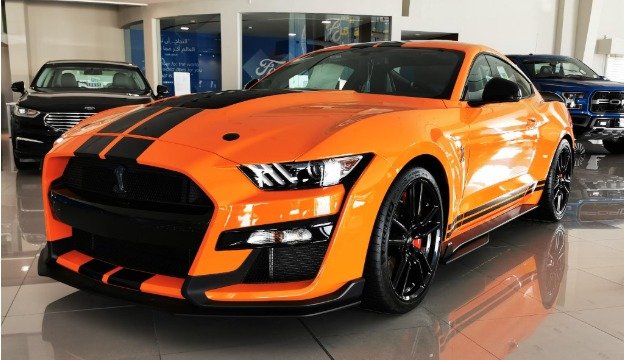

The answer to the question of whether clear paint protection films (PPFs) will protect your car from road hazards and flying stones is a resounding yes. A high-quality clear PPF wrap is a powerful energy absorber. The film will absorb the energy of an impact, and not the clearcoat.
The mechanics of protection
You must look at the film thickness and materials science to understand why PPF clear is superior to thin vinyl wraps or ceramic coatings.
The paint on new vehicles is extremely thin, measuring only 4 to 5 millimeters (including primer, base colour, and clearcoat). One pebble kicked by a semi truck at 70 mph is enough to cut through the thin paint layer and expose the metal.
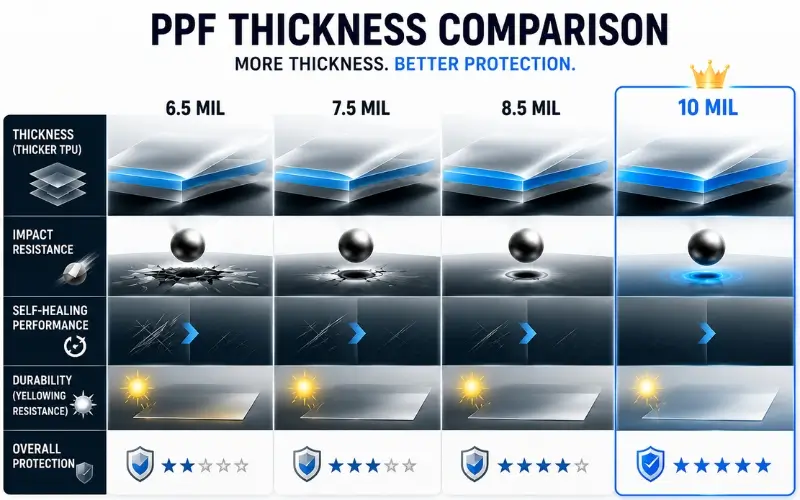
As shown above, PPF clear relies on mass and elasticity alone to resist these impacts.
- Energy dispersion: Premium Films add approximately 7.5-10 mils highly elastic Thermoplastic polyurethane (TPU), on top of the paint. This effectively doubles the thickness of your vehicle’s protective layer.
- The Trampoline effect: If road debris strikes the TPU film, it stretches for a moment rather than cracking. It works like a trampoline to slow down the object and spread the force over a large surface area, rather than focus it in a single spot.
What happens during a severe debris strike?
Although PPF can be extremely durable, extreme road hazards may occasionally leave a stain. Understanding the visual result of a hit helps you manage your expectations.
The film Saving the Factory Clear Coat includes a sacrifice in the film.
Three things usually happen when a large sharp rock strikes your vehicle wrapped in plastic:
- Complete self-healing (Minor strikes): A rock will leave a small surface scratch or indentation. After a few minutes, the shape-memory plastics in the film close the hole, erasing it completely.
- Sacrificial protection (Moderate-to-Major Strikes: Impact is severe enough to permanently dent, tear, or mar the PPF. When you remove the film, it is a perfect factory paint.
- The Extreme Strikes: An industrial piece of highway debris, such as a jagged screw or shredded tread on a tire, strikes the vehicle. This can in rare cases chip or puncture the paint. However, the damage is much less than if the car was not protected.
How to Choose Your Shield: Full or Partial Coverage?
You don’t have to wrap your entire car to protect it from road debris. It depends on how you drive and what budget you have.
| Package Option | High-Risk Areas Covered | Best Suited For | Protection Level |
|---|---|---|---|
| Partial Front End | Front Bumper, Headlights, Leading Edge of Hood & Fenders | Daily city commuters on a modest budget | Basic impact defense |
| Full Front End | Entire Hood, Entire Fenders, Bumper, Mirrors, Headlights | Highway commuters and track-day enthusiasts | High-risk impact defense (90% of rock chips hit here) |
| Full Vehicle Wrap | Every painted exterior surface | Luxury, exotic, matte-finish cars, or off-road vehicles | Absolute 360-degree protection |
Common Myths About PPF Debris protection
- Myth No. 1: Ceramic coatings prevent rock chips. They are liquid polymer sealants which cure to a hardness that is designed to stop chemical etching. They offer zero resistance to road debris.
- Myth #2: PPF will make your car bulletproof. PPF can handle stones, bugs, and gravel with ease. However, it cannot stop shopping cart slams or vandalism, if pressure is applied that causes the polyurethane to tear.
- Myth #3: Rock chip damage is permanent. When a rock dent leaves a permanent mark on the film, but the paint underneath it looks fine, you can peel off the body panel and rewrap the body without having to pay for a respray in a body shop.
Conclusion
A clear PPF wrap will keep your car looking new, and help you maintain the maximum value of its resale. It is one of the most effective defense systems for cars. It is a thick, sacrificial layer that protects your vehicle from road debris and rock chips. This will save you thousands in paint repairs and body shop resprays. PPF will protect your vehicle’s exterior. However, if you follow Safety Tips Every Owner, such as regular inspections and safe driving habits along with routine maintenance, it can extend the lifespan of your vehicle. These practices will help to preserve your vehicle’s appearance and condition for many years.
Read Also: RTA Fine Check Dubai
Frequently asked questions
Does clear PPF prevent headlights from cracking?
Yes. The modern PPF that is optically clear and thick is perfect for headlights. It protects polycarbonate lenses against sandblasting, yellowing caused by UV rays and helps to absorb rock impacts.
What will happen if the gravel tears off the film?
The advanced acrylic adhesive will keep the area around the hole bonded if a sharp gravel piece tears it. Although the torn area won’t bubble up or peel immediately, you should replace that panel to prevent moisture from entering.
Does road salt eat away the paint protection film on cars?
Not at all. The premium clear PPF has a high chemical resistance. This PPF isolates harsh environmental pollutants, such as magnesium chloride and winter road salt from the factory clear coat. It prevents corrosion and rust.
At what speed can a vehicle go before the PPF is unable to stop a chipped rock?
The protection is dependent on the angle and size of the stone. Clear PPF is used routinely on supercars that exceed 150 mph in order to reduce tire rubber marks and track debris.
Can I see the clear PPF on my car after installation?
Modern clear PPF can be installed by a professional and is almost invisible when the edges are rolled inside the gaps between the panels. It has a high-gloss, mirror-like finish that enhances or matches the factory clear coat.