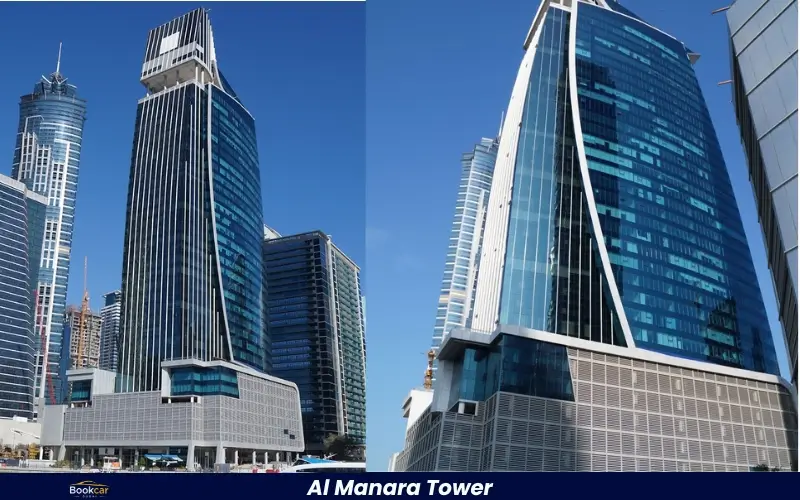

Office buildings are deemed to be relevant for a long time not by branding or aesthetic appeal however, they are able to demonstrate how they facilitate the everyday routines of professionals. The tower of Al Manara is often sought-after by those who need information about accessibility to offices as well as the surrounding amenities, parking, as well as the convenience of daily commutes. The primary reason for searching is practical. Business owners, professionals, consultants, visitors, and others need to know if the building is compatible with their routines and work schedules, without causing unnecessary stress.
It is a part of the commercial space where it is essential to be predictable. Employees rely on easy access, arranged parking and the nearby amenities to handle long working hours effectively. People look for it to see how it’s easy to reach parking spots and what amenities are nearby. It is not associated with the luxury of tourism or luxury it is appreciated for its reliability, structure and accessibility. The popularity of its search results reflects its actual use, not only aesthetic appeal.
al manara tower – construction with a purpose
The tower is primarily used to be an office commercial structure that is designed to be used on a regular basis during the week. It houses professionals, consulting firms, administration teams, as well as service-based firms who require stability and not the latest in high-end design. The internal structure accommodates the various sizes of offices that allow small teams as well as established companies to function comfortably.
Every day, the building manages to handle frequent foot traffic effectively. Entrance points, elevators as well as common spaces are designed to minimize confusion during peak times. The design is based on functionality, ensuring that employees are able to move into and out of the building without a hitch. In time, this practical method has established this tower to be a stable office space, rather than a temporary or trendy office space.
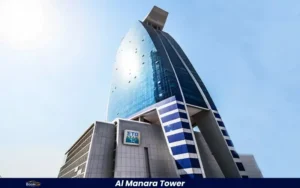
Location context and the surrounding business context
The area around is a crucial factor in the way office buildings function every day. The area is part of a reputable commercial zone, rather than an independent structure. Nearby buildings house banks, tech companies, professional service firms offices, as well as business support companies. This creates a thriving ecosystem that meets the needs of professionals locally.
Employees are able to access close-by services that can reduce the amount of time during office hours. Visitors to offices will discover the building to be comfortable and simple to navigate and this improves the speed of meetings and the overall user experience. The presence of other businesses near the tower increases its potential as a functional office address. As time passes, these environments are a good fit for long-term tenancies and professional activities.
The most frequent nearby business-support facilities are:
- Banks and financial services offices
- Document and printing services
- Logistics and Courier offices
- Shared workspaces and business centers
Connectivity to the road and efficiency of commuting
The efficiency of commutes is one of the most crucial factors for both businesses and office workers alike. This building has access via major highways that divide traffic throughout commercial and residential zones. The location is accessible to drivers via multiple routes, thus reducing the need to travel on one congested route.
This flexibility is especially valuable in the peak hours of office. Employees have more predictability in their travel schedules and visitors enjoy more clear navigation. Many professionals evaluate commute convenience this way with office spaces nearby like Gheyath Tower when evaluating daily commute stress and accessibility reliability. The option to select alternative routes can help reduce delays and helps ensure regular scheduling.
Parking availability and management of access
Parking is a constant operation for any office building. This tower tackles the problem by implementing a structured parking system that is designed to accommodate guests and tenants. Employees usually get access to a designated parking space and lessen the stress of hectic mornings.
Parking for visitors is controlled to minimize congestion during peak times. Security-controlled access and exit points to ensure that traffic flows smoothly through the building. Security monitoring is an additional layer of security and organization. If a business has regular clients, a predictable parking system enhances the professional image of the business. In time, dependable parking management is one of the buildings’ most significant benefits in the real world.
Access and parking features that are crucial include:
- Parking areas designated for tenants
- Parking management systems for visitors
- The controlled entrance and exit locations
- Zones of access monitored for security
Nearby dining, shopping and other daily necessities
Office productivity is tightly tied to the accessibility to daily amenities. The area around has informal dining options, cafes and takeaway restaurants that are suitable for quick breaks or business lunches. These restaurants can accommodate different times and schedules.
Drugstores, retail conveniences and small supermarkets and services for personal use are available nearby. Workers can complete simple errands prior to or after work, without having to extend time for commutes. This convenience boosts everyday comfort and helps support the work-life balance. For employers, such environments help to improve happiness and retainment of staff.
Common conveniences nearby are:
- Cafés and casual eateries
- Drugstores and medical stores
- Convenience stores
- Service shops and personal care
Businesses that have the best type of structure to the construction
The building is popular with businesses that are focused on the sameness of operations and accessibility. Common tenants include consulting companies and IT service providers. They also include logistics coordinators, accounting offices, Regional administrative departments, and logistics coordinators. They benefit from a space which supports regular operations, instead of branding driven by visibility.
Office layouts allow for focused personal work, as well as small-scale team collaboration. Businesses often select this type of building to stay in for the long term because their employees’ commutes are stable. Service-based companies find it easy for customers to get to the building without having to navigate the complex streets. This arrangement of accessibility, space and the daily routine helps keep occupancy levels steady.
The most common profiles of business are here:
-
Firms offering consulting and advice
-
Support for technical and IT services
-
Audit and accounting offices
-
Teams from the regional and administrative levels
Accessibility to clients and the experience of visitors
Accessibility for clients is an essential aspect for offices that are professional. The office provides a simple accessibility for visitors, thus reducing the amount of confusion and delay. Clear roads, well-organized parking and a professional surroundings contribute to pleasant visitors’ experiences.
Meetings are more likely to not be delayed because of problems with parking or traffic. This stability is beneficial for companies that serve clients who rely on punctuality as well as professionalism. As time passes, accessibility becomes an element of the company’s operational efficiency, which affects customer satisfaction and frequent visits.
Comparison to nearby office buildings
When considering office locations professionals typically compare multiple offices within the same area. It is usually about accessibility, simplicity, parking management, and ease of use rather than aesthetics. A few experts examine this tower against similar options nearby like Gheyath Tower to assess commute stress, handling of visitors, and the flow of operation.
Instead of competing with the appeal of luxury, this building is positioned as a stable workplace-oriented option. Companies that prefer routines that are predictable and minimal disruption typically choose these locations. This is an effective way of ensuring the relevance of office spaces even as newer office buildings are introduced to the market.
Traffic patterns, peak hours and behaviors
Traffic patterns within the building are based on predictable office hours patterns. Peaks in the evening and morning are apparent, but can be managed because of the numerous access routes. The absence of massive tourist or retail traffic can ensure the flow of traffic more smoothly than commercial areas.
Drivers are benefited by clearly marked and well-organized lanes. The road network surrounding them supports regular movement, not frequent stops. This ease of travel reduces stress and ensures a steady time of arrival. For office workers who work every day, steady traffic patterns are an enormous benefit.

Usability over the long term and stability of location
In the long run Office spaces that focus on functionality are likely to last for a longer period of time. The building is aided by the surrounding commercial infrastructure that can provide professional support without any major disruption. As the nearby zones develop it is a place that can be used because of its location.
Urban planning trends are increasingly favored by the decentralization of development and a balanced approach to development. These areas benefit from lower pressures compared to Central business corridors. For businesses planning operations over a long period the stability of these locations reduces the risk of relocation and increases operational uncertainty.
Practical benefits to daily office life
Every day office life is dependent on the small efficiency that adds in time. The building helps to improve efficiency by providing efficient access, near services, and regular commuting. Employees have less time to deal with the logistics of their work and spend more time working.
Employers, this translates to better attendance, lower stress levels, and more efficient daily activities. These benefits are often more important than the aesthetic aspects when selecting offices.
Benefits of daily use are:
- Predictable commute times
- Parking access organized
- Nearby retail and food services as well as grocery stores
- Professionally designed environment
Related Article: Latifa Tower Dubai
Final Summary
The office building is notable by its durability, not the appearance. It meets the demands of professionals every day such as efficiency of commuting as well as parking management, near amenities, and a streamlined workplace. Its benefits lie in the reduction of friction between clients, employees and business alike. For businesses that want reliability as well as accessibility and long-term viability it is a sensible and reliable option in the business landscape.
FAQS
Do you think this building is suitable for office use?
Yes, it was specially designed for regular professional use on a weekday.
Do employees face parking challenges?
Parking is usually designed to serve both tenants and visitors.
Are restaurants and shopping options accessible nearby?
Sure, dining casually as well as vital retail facilities are available within a short distance.
Are the facilities accessible to clients?
The space is well-organized, professional and simple for visitors to navigate.
Which companies stand to gain the most from this area?
Service-based business, consultancy administration and support-oriented companies.
Does the building meet the requirements to be used for office use over a long period of time?
The stability of the structure and its functional design makes it suitable for long-term living.