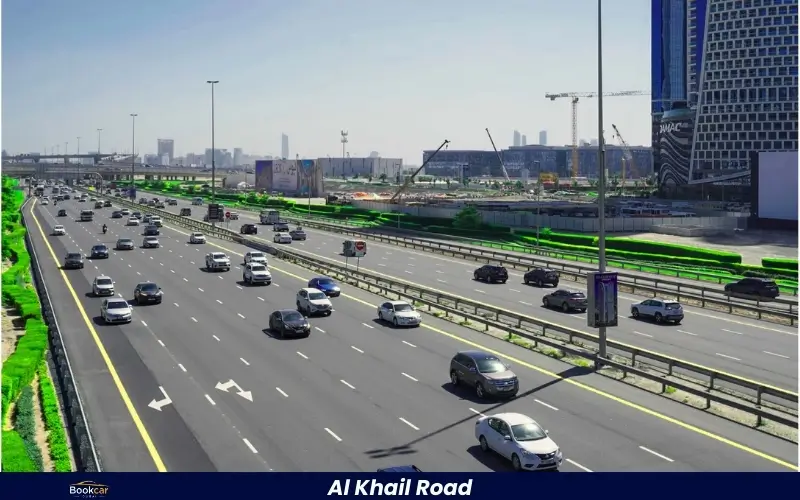

Al Khail Road, a major transportation corridor, is used to connect residential areas, commercial districts and lifestyle destinations. It is a popular route for drivers who value time efficiency, predictability of traffic, and connectivity. Its multi-lane design, carefully planned exits and well-maintained traffic flow allow for a smoother journey compared to smaller roads.
The road is used by many drivers, including office commuters, private drivers, and service providers who rely on safe travel conditions. Drivers can make better decisions by understanding how the road works, what services are available from it, and comparing it with other inner-city alternatives.
Al Khail Road Strategic Importance, Urban Connectivity and its Strategic Importance
Al Khail Road is important because it connects residential areas with service and business-oriented zones. Instead of concentrating traffic in narrow city streets it spreads the vehicle movement over a wider corridor reducing pressure on small roads. This balance flow promotes urban growth because it allows different areas to be accessible without causing constant congestion.
The road connects multiple districts via planned interchanges. This allows drivers to travel from one destination to another with less detours. This connectivity is especially valuable for those who travel between home, work and service locations in a single day. This predictable layout is also beneficial for logistics and planned travel which rely heavily on accuracy of time.
Road Design and Infrastructure Quality
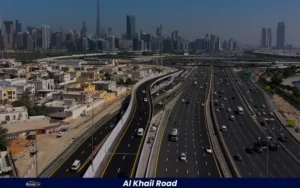
Physical design of roads is based on safety, durability and clarity. The wide lanes help vehicles maintain a constant speed, while the gradual curves and controlled entry point reduce sudden braking. The road surfaces are designed for heavy commercial traffic as well as private vehicles.
Signage and lane markings placed above the road give drivers sufficient time to react when approaching exits or interchanges. It reduces the need for last-minute lane switches and increases traffic discipline. This is because the design philosophy emphasizes constant movement over frequent stops.
Traffic Patterns and Behavior during Peak Hours
The traffic levels vary throughout the day based on commuter cycles. Traffic levels are usually higher in the morning and evening as people commute to and from their jobs. Traffic flow is often regulated by the road capacity and lane management.
The route is suitable for long drives because it has minimal traffic interruptions outside peak hours. This corridor is more predictable than inner-city streets with traffic lights, pedestrian crossings and roadside parking. Plan your trips to avoid delays and stress.
Access to commercial and lifestyle facilities
The proximity of commercial and lifestyle amenities is one of the many benefits of travelling along this corridor. Many exits are located near shopping centers, dining areas, and service centers, which allows drivers to combine their daily travel with errands.
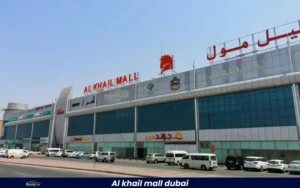
One example of this is the access to al khail Dubai mall, which can easily be reached through nearby exits without having to navigate congested streets. This makes it easier for drivers to navigate the main roads rather than the smaller ones, which improves traffic flow.
Safety Measures and Driving Environment
Infrastructure and monitoring are both important in ensuring safety. The speed limits are clearly posted, and the enforcement systems encourage disciplined drivers. There are emergency shoulders that allow vehicles to safely stop without blocking traffic.
Driving environments are designed to reduce surprises. Drivers can stay focused with clear visibility, predictable exits and consistent lane widths. This will reduce the chances of sudden maneuvers, particularly during busy periods.
Comparative Analysis with Inner-City Roads
Comparing smaller roads with larger ones, the benefits are more obvious. In the inner city, there are frequent stops, variable speeds Mohammed bin Zayed Road , and unpredictable traffic caused by parking or pedestrians. Al Khail Road, on the other hand, offers more continuity and less interruption.
This comparison shows why drivers often choose this route even though other routes may appear shorter on maps. When it comes to daily commutes, consistency often wins out over distance.
Practical Highlights of the Mid-Article
It is important to note the most important practical features that drivers find valuable.
- Traffic patterns outside of peak hours are predictable
- Access to commercial destinations via exits
- Inner roads have a reduced stop-and-go rate
- Stable speeds improve fuel efficiency
- Signage that encourages early decisions
All of these factors contribute to a more enjoyable driving experience.
Access to Retail and Travel Convenience
The convenience of shopping plays an indirect, but significant role in the choice of route. The drivers choose routes that are convenient for shopping. Al khail Mall Dubai provides an example of a transport corridor that supports lifestyle without creating localized congestion.
Drivers can save time and reduce travel complexity by using main exits rather than internal streets. By keeping traffic in the local area under control, this is beneficial to both road users as well as surrounding neighborhoods.
Corridor vs Inner Roads – Practical Comparison
| Aspect | Main Corridor | Inner Roads |
| Traffic Flow | Structured and continuous | Variable and interrupted |
| Lane Width | Widespread and consistent | The narrow in many areas |
| Travel Time | More Predictable | Often uncertain |
| Safety | Monitoring and high visibility | Moderate |
| Retail Access | Exit-based | Street-level congestion |
Daily commuter patterns What role does it play?
Reliability is more important to daily commuters than speed. Having a good sense of the travel time, familiar exits and road behaviors, as well as a stable schedule, helps people to plan accurately. It is particularly useful for professionals who have to arrive on time at their workplaces, service locations, or appointments.
Al Khail Road is a predictable route, and because of this it is preferred for regular travel as opposed to occasional use.
Environmental and Efficiency Considerations
A road that is designed efficiently can reduce fuel consumption and improve engine performance. The emissions are lower when there are fewer stops and a steady acceleration compared to routes that have frequent braking.
Maintaining consistent speed is not only fuel-efficient, but it also reduces wear and tear on the vehicle. This efficiency will benefit both the individual and the transport system over time.

Long-Term Urban Value
This infrastructure supports long-term growth. The road will continue to be able to adapt and provide capacity as the surrounding area grows. Its importance does not depend upon short-term trends, but rather on structural planning.
The corridor will continue to be useful as traffic increases over time, thanks to its long-term value.
Driving Experience
Clarity, control and confidence define the overall Al Khail Road experience. Drivers are able to anticipate exits and manage their speed with ease. They can also avoid unnecessary stress. Its balance of simplicity and capacity makes it ideal for all users, including daily commuters as well as
service operators.
Related Article: Sheikh Zayed Road
conclusion
The article explains how Al Khail Road is a major transport corridor. It does so by looking at its design, its traffic behavior, the safety environment and the surrounding conveniences. By comparing the Al Khail Road with other inner-city streets and using practical examples like access to al khail Dubai mall, it is clear why this route is so valuable for efficient daily commuting. Its structure and reliability over time continue to meet practical travel requirements without adding unnecessary complexity.
FAQ
Is this road suitable for daily commuters?
It offers predictable traffic patterns, and it is stable.
Can it reduce congestion on smaller streets?
It does distribute traffic more evenly on the network.
Are shopping malls easily accessible?
You can easily access commercial destinations from several exits.
What is the difference between internal city roads and this road?
There are fewer interruptions, and the flow is more constant.
Does it have a safety monitor?
Signage, speed limits and monitoring systems are all part of a safe driving environment.