

The rapid development of Dubai into a world-class city is closely connected to the expansion of sheikh Zayed road. The iconic highway isn’t only a transportation corridor, but also the main artery of the city’s business and residential areas have grown. The road runs through the middle of Dubai and links major hubs of commerce, luxurious areas, and famous landmarks which makes it one of the most significant routes throughout the UAE.
What distinguishes this road is its capacity to serve as a high-capacity road as well as a symbol of Dubai’s ambitiousness. It is lined with hotels, skyscrapers, corporate headquarters, housing towers. The road represents the city’s economic power as well as its architectural vision. For professionals, residents and travelers, this avenue offers convenience, opportunities and contemporary urban living.
The urban is strategic and important.
The road is parallel to the coastline of Dubai and connects key areas like Downtown Dubai, the Trade Centre area, Business Bay as well as Downtown Dubai. The strategic location of the road allows seamless travel between the older parts of the city as well as newly constructed zones. Because of this large corporations have chosen areas along the corridor to increase accessibility and visibility.
In addition to transportation the road plays crucial roles in shaping urban development. The entire neighborhoods have been built around it, linking hotels, offices as well as residential towers and retail space into one continuous urban landscape. This is among the top and most significant design elements of Dubai’s development time.
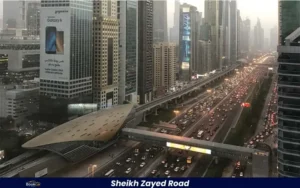
Buildings with a landmark architectural skyline and architectural skylines
A striking aspect that the street has is the skyline. Glass towers dominate the view, creating an impressive visual identity that is now the symbol of Dubai. The city’s most well-known hotels and towers are situated on this stretch, which contributes to its worldwide recognition.
The design reflects a blend of luxury and corporate living. Office towers are situated next to serviced apartments and luxury hotels, which allows professionals to live and work in the same area. This vertical design maximizes the land’s use, while preserving an urban landscape that is dynamic.
Commercial and business significance
For companies, having a presence on this avenue is considered to be a mark of distinction. Financial institutions, multinational corporations and regional headquarters are based because of the high connectivity and a high level of visibility. Close proximity to the government offices, exhibition centers and business districts increases its appeal.
Business owners can benefit from:
- Direct metro connectivity
- Central location in Dubai
- Commercial addresses with a high profile
This makes the corridor one of the best commercial zones in the city.
The lifestyle of residents along the corridor
The road-based lifestyle provides a fast-paced urban experience. Towers for residential homes provide convenient access to offices, eating, entertainment, and dining making commutes less stressful and helping to improve the quality of life for employees. A lot of residents choose this area because everything they require is easily accessible via walking or just a few minutes away by metro.
Despite the fact that it is a busy road, modern architecture and soundproofing provide the comfort of your home. The accessibility of stores, gyms and cafes in towers makes life easier.
Metro connectivity and public transport
The road is connected to Dubai’s metro system, which makes public transportation a viable alternative for everyday commutes. Numerous metro stations are located along the road, linking the major destinations of the city.
This improves connectivity and reduces the dependence on private cars and helps Dubai’s goal of green urban mobility. Pedestrian walkways and bridges make it easier to access the metro station and other buildings.
Daily movement and traffic flow
As one of Dubai’s most crowded roads, the flow of traffic varies according to the time of day. The peak hours typically see a lot of traffic, particularly in the morning and evening commutes. However the well-planned interchanges and numerous lanes allow for managing massive traffic volumes efficiently.
Drivers who are aware of peak times are able to plan their routes accordingly and many professionals choose using metros to get around congestion.

Connection with Downtown Dubai
The road offers direct access for visitors to Downtown Dubai, linking visitors to the city’s landmarks, hotels and other lifestyle places. From this point, pedestrians can quickly access entertainment venues and other attractions, such as the internal Sheikh Mohammed Bin Rashid Boulevard, that serves as a leisure extension to the business center.
This connectivity allows seamless movement between high-speed routes for transport and pedestrian-friendly urban areas.
Hotels, dining and hospitality
The hotels along the corridor offer services to both tourists and business travelers alike. Some offer views of the skyline as well as direct metro access and are close to exhibition facilities. The dining options vary from casual cafes to fine dining restaurants within hotels and towers.
The diversity ensures that visitors and residents can have a variety of experiences, without having to travel far away from their homes.
Similarity to other roads
In comparison to other roads within Mohammed bin Zayed road, it is unique due to its multi-use design. While other roads serve primarily transportation purposes, this one blends working, living and leisure in an all-encompassing space.
It is often called sheikh Zayed street. However, its size and impact surpass the typical street in a city.
Cultural and economic influence
It has also played an important contribution to positioning Dubai as a major business center. International trade shows, events and conferences usually occur in venues close to or along this road which has increased its international significance.
In terms of culture, it represents growth, ambition and the city’s rapid development in the last few decades.

Environmental and planning issues
Urban planners are constantly upgrading the corridor in order to increase the efficiency and sustainability of the corridor. Metro expansion, better access for pedestrians and intelligent traffic systems are a result of ongoing efforts to ensure that growth is balanced with the quality of life.
Energy-efficient and green building towers are becoming more seen along the highways.
Related Article: Al Zahra Hospital Dubai Sheikh Zayed Road
Conclusion
Sheikh Zayed Road is more than a mere highway It is the backbone of economics and structure of Dubai. Its impact extends to residential, business transportation, as well as urban identity. By connecting major areas and facilitating a wide range of activities that continue to influence how the city travels around, operates, and lives. It can be viewed as a commuter route or as a business location, or as an architectural landmark the significance of it to Dubai can’t be overstated.
(FAQs)
Is the Sheikh Zayed Highway really the most important route in Dubai?
Yes, it’s the primary highway that connects important districts and landmarks.
Does the metro line run on this road?
Yes, a number of metro stations are situated directly on the corridor.
Can it be used for residential use?
Yes some residential towers provide the comfort of living while also offering excellent connectivity.
Are there businesses that are concentrated on this route?
Yes, it’s one of Dubai’s largest commercial zones.
What is the connection and how does it connect to Downtown Dubai?
It gives easy access to Downtown and other nearby places of interest.